
Equipment On Parade
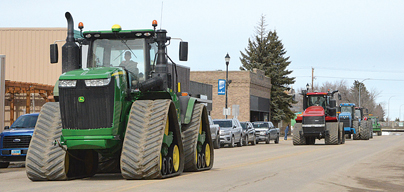
If you drove by the Stanley High School on Wednesday, Mar. 18, you might have been surprised by what you saw in the parking lot. As part of their celebration of National Ag Week, Stanley’s FFA Chapter hosted their annual Drive Your Farm Equipment To School Day on Wednesday, Mar. 18.
Stanley FFA alumni and local community members were invited to join their annual Farm Equipment Parade on Main street. National Ag Week was March 15 through 21 this year. It is a good reminder of the impact of agriculture in North Dakota and across the country.
The parade featured tractors in all the colors, trucks and even some horseback riders,
Stanley elementary students were among the many that lined Main Street to watch the parade go by.
The history of National Ag Week reflects that agriculture is the biggest food contributor in America. America is the net exporter of food, which means that this industry is a source of food and wealth. The rich history of agriculture in the U.S. attracted colonists to the area. Since most colonists were European, the styles of agricultural cultivation and production were influenced by Europe as well. Colonists also brought a large amount of livestock with them to America, which caused changes in its natural landscape.
As the population grew, farms expanded, and settlements moved from the east into the west. This caused the agricultural industry to grow exponentially, with a larger variety of produce being rooted. Once the west was populated and cultivated, a wheat frontier was formed. The east was firmly set on cattle and livestock with only a handful of small-scale crops. On the other hand, the south was dominated by tobacco and cotton. Lastly, the north was dominated by people who planted only what they needed, anything in excess was sold to the market.
It was only during the Civil War and the Second World War that the agricultural system became centralized, and a proper agricultural system was introduced. The Agriculture Council of America, formed in 1973, has supported the farmers and agricultural advancements in farming techniques in the U.S. It comprises influential leaders in agriculture, food, and farming who work together as a non-profit organization dedicated to educating the world on the importance of agriculture in American Society.
At the same time as the council was formed, the first National Agriculture Day was also introduced, which soon developed into an entire week-long celebration. National Agriculture Week has been celebrated ever since, with full enthusiasm to support agriculture and spread awareness about the potential and vitality of agriculture.
Agriculture generates billions in cash receipts in North Dakota, which translates into even higher numbers of economic activity. Over 39 million acres of land in North Dakota are owned, operated or managed by farmers and ranchers with the state being home to approximately 26,000 farms. Production agriculture and agriculture-related industries support almost 25% of the workforce in North Dakota. North Dakota is number one in production of many commodities and produces over 50 different commodities.
Next up for the Stanley FFA will be their annual awards banquet on Thursday, Mar. 26 at the Mountrail County South Complex. The evening will acknowledge the awards earned by FFA members and celebrate their achievements this past year. Guest speaker will be Calli Thorne, a North Dakota rancher, keynote speaker, leadership trainer and mindset coach from Watford City. Opening ceremonies begin at 6 p.m. with a free will supper, silent and live auction, and the popular cake wars.